
David Brown clutch replacement
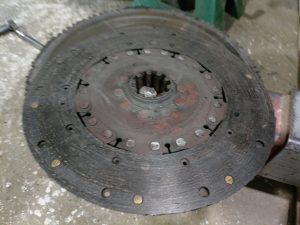
David Brown Clutch Slipping Under Load? Here’s Why — And Why You Should Check the Clutch Brake Band Too
If your David Brown tractor starts revving high but loses pulling power when you hook up an implement, you’re likely dealing with a clutch that’s slipping under load.
And if you’re also hearing grinding when shifting into gear, there’s a good chance the clutch brake band is worn out as well.
These two issues commonly show up together on older David Brown tractors — especially models like the 990, 995, 996, 1210, and 1212. The good news? Both problems are repairable — and when addressed properly, your tractor can return to full working strength.
How to Confirm a Slipping Clutch
Before splitting the tractor, perform this simple test:
-
Put the tractor in a high gear
-
Apply the brakes firmly
-
Slowly release the clutch
If the engine does not stall, the clutch is slipping.
Also check clutch pedal free play. Most David Brown models require approximately 1 to 1.5 inches of free movement.
Incorrect adjustment can mimic clutch failure — so check that first.
What’s Required for Repair?
Repairing a slipping clutch and bad brake band requires splitting the tractor between the engine and transmission.
During repair, it’s strongly recommended to replace:
-
Clutch disc
-
Pressure plate
-
Release bearing
-
Pilot bearing
-
Clutch brake band
-
Any leaking engine or transmission seals
Because labor is the largest portion of the job, replacing all wear components at once prevents future tear-down.
Why Acting Early Saves Money
Running a slipping clutch too long can lead to:
-
Flywheel damage
-
Transmission input shaft wear
-
Increased heat damage
-
Complete loss of drive
Likewise, ignoring a worn clutch brake band can cause excessive gear grinding — eventually leading to transmission damage.
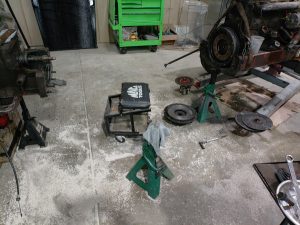
“Clutch service in progress: David Brown tractor split.